
Our story, our mission.
Irawo University Centre complements the formal academic training students receive at university, fostering academic, professional, cultural, human and spiritual development in a family atmosphere.

The centre complements the formal academic training students receive at university by fostering academic, professional, cultural, human and spiritual development. Irawo provides the warmth of a family atmosphere conducive to serious academic work and the formation of character — an environment directed towards excellence, not only in learning but in character.
Activities of a spiritual nature are entrusted to the Prelature of Opus Dei, an institution of the Catholic Church. Irawo is open to individuals of all races, nationalities and creeds.

Investing in professional and character development of persons for a better society.
Investing in people and the future… these two versions represent the same aspiration held fervently in Irawo — that the dignity we have as persons can lead to rippling effects within us and society at large. A desire to solve societal ills has to be inculcated in everyone.
Irawo helps university students acquire the habits of a good professional: to seek excellence in their work, to use their professional expertise in the service of others, and to see their work in the larger context of a flourishing life.
Irawo's programmes are inspired by a Christian spirit which views the world as good, sees work as the fulfilment of man's nature, and emphasises service towards one's neighbour. The Christian orientation of Irawo's programmes is entrusted to Opus Dei, a Prelature of the Catholic Church.
The vision of Irawo remains to turn out young men who, with their competence and approach to work, will be stars in their respective fields in society — outstanding in their careers, with an upright approach to life; men who will be constant sources of understanding and service in their environment.
Values driving our investing in persons
- Human dignity & integral education
- Leadership as service
- Academic & professional excellence
- Attention to details
- Family oriented
Marks of a true professional
- Excellence in work and life
- Integrity and service
- Attention to details
- Family
Opus Dei
Irawo is inspired by the teachings of St. Josemaría Escrivá, the founder of Opus Dei. It was he who asked Jeremy White — an Englishman with a Commonwealth scholarship for postgraduate studies at the University of Ibadan — to come to Nigeria.
Opus Dei taught Dr. White that through ordinary work well done, and for love of God, he could become holy, while also helping to improve society. Irawo was the fruit of a shared concern to make this same ideal take root in thousands of Nigerian students.
By providing a homely environment of serious study, friendship and concern for others, students are helped to aspire to the top of their professions, while acquiring the virtues necessary to live this universal call to holiness in the midst of ordinary life.
Irawo has a chapel and a priest of Opus Dei to attend to the spiritual needs of students who freely desire it. Its facilities are open to everybody, irrespective of creed or race, Christians and non-Christians alike.
Visit opusdei.org Since 1969
History — E.C.S.
In 1969, Jeremy White, then a lecturer at the University of Ibadan, together with a group of friends, started Irawo University Centre. The permanent site opened its doors to its first residents in 1990, made possible by the generous donations of several collaborators.
The Educational Co-operation Society (ECS) is a non-profit, non-governmental organisation incorporated in Nigeria under the Companies Decree in 1974, as a charitable trust limited by guarantee, RC 13503. ECS envisages a Nigeria where all persons have access to quality education and personal development, irrespective of social, cultural, ethnic or religious background — promoting projects that further education, social welfare and character development in accordance with Christian principles.
- 1969Jeremy White arrives in Nigeria.
- 1969Prof. Alos arrives in Nigeria.
- 1969Jeremy White, Prof. Alos and friends begin Irawo University Centre.
- 1983Plans for a permanent site begin.
- 1990The permanent site of Irawo welcomes her first residents.
- 1990sThe Bishop Prelate of Opus Dei, Don Alvaro, visits Irawo.
- —The first Annual Lecture is held.
- —First official visit of the Vice-Chancellor of the University of Ibadan.
- 201950th anniversary of Irawo's existence celebrated.
- 201525th anniversary of Irawo's permanent site.
- —Launch of the Irawo Endowment Fund by her Alumni & Friends Association.
Board members
Outstanding professionals in society who give valuable insights into the advancement of the aims of Irawo. The board consists of twelve members, renewed every five years, with a limit of two terms.
- 01Prof. Charles UwakweChairman — Former Senior Director of NECO
- 02Prof. Steve AfolamiFormer Vice Chancellor (FUNAAB; St. Augustine University)
- 03Prof. Cadmus IdowuLecturer, University of Ibadan
- 04Prof. John AnetorLecturer, University of Ibadan
- 05Engr. Wole LabiranCEO, Segun Labiran & Associates
- 06Dr. Egbunike NwachukwuLecturer, Pan-Atlantic University (PAU)
Executive management

Dr. Ibukun Afolami
Director

Mr. John Onyejegbu
Executive Management
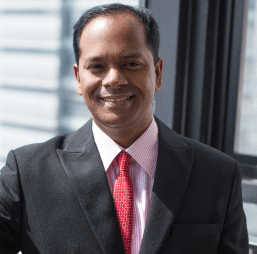
Mr. Jefferson Amah
Secretary

Fr. Pedro Okafor
Chaplain